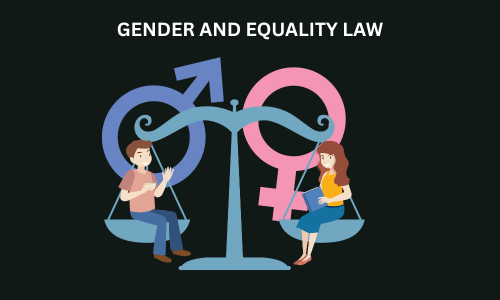
Gender and Equality Law
Gender and equality law is about ensuring that every person — whether male, female, or transgender — gets equal treatment, rights, and opportunities in Indian society. This idea goes beyond just words in the Constitution; it’s about changing mindsets, challenging old prejudices, and empowering individuals to live with dignity. Over the years, both the Constitution and several legal statutes have laid the foundation for a more just and fair society. But the journey toward true gender equality is ongoing, marked by progressive judgments and continuing reforms.[1]
Constitutional basis of Gender Equality
The Indian Constitution stands as the central pillar for gender equality. Article 14 ensures “equality before law,” meaning that every individual, regardless of gender, caste, or religion, is protected by the same legal framework. Article 15 goes a step further by prohibiting discrimination by the State on grounds of sex, but it also allows for affirmative action — special provisions for women and children, to help counterbalance historic inequality. Article 16 secures equal opportunity in matters of public employment. The important Directive Principle, Article 39, directs the State to guarantee equal pay for equal work for men and women. Such constitutional guarantees form the core of India’s “Equality Code,” pushing the administration to actively eliminate systemic discrimination.[2]
Key Legislative Measures
In addition to constitutional rights, several statutes work to actualize gender equality. The Equal Remuneration Act, 1976, mandates equal pay for equal work and is crucial for workplace equality. The Maternity Benefit Act, 1961, protects working women’s rights during and after pregnancy. The Transgender Persons (Protection of Rights) Act, 2019, recognizes the rights of the third gender and prohibits discrimination against transgender people in education, employment, healthcare, and access to public services. These laws illustrate India’s commitment to protecting and uplifting all genders.[3]
Landmark judicial Decisions
Courts in India have played a vital role in defending and expanding gender equality. The Supreme Court has struck down provisions rooted in stereotypes, such as the Punjab Excise Act prohibition on women’s employment in bars, emphasizing that laws based on outdated gender roles must be rejected. In Independent Thought v. Union of India (2018), the exception to criminalizing marital rape for wives below 18 was deemed discriminatory and inconsistent with women’s bodily autonomy and constitutional rights. These judgments help clarify that equality is not just a principle but a lived reality, where the law is used to challenge discriminatory practices and protect individual dignity.[4]
Challenges and The Way Forward
Despite detailed legal protection, gender inequality persists due to social norms, economic disparities, and gaps in implementation. Issues like unequal access to education, wage gaps, violence, and underrepresentation in public life remain. There’s also the ongoing challenge of making the legal framework more inclusive, especially regarding the rights of transgender individuals and people with intersecting identities.[5]
Conclusion
Gender and equality law in India is a dynamic field anchored in constitutional values and enriched by statutory protections and judicial vigilance. The real test lies in translating rights on paper into everyday reality—through better enforcement, awareness, and reforms addressing deep-seated prejudices. As a law student, this area is not just about statutes and cases, but about upholding justice and pushing society towards true inclusion and fairness.
[1] https://en.wikipedia.org/wiki/Gender_equality
[2] https://www.lexisnexis.in/blogs/laws-for-women-in-india/
[3] https://www.un.org/en/global-issues/gender-equality
[4] https://sleepyclasses.com/legislative-milestones-for-gender-equality-in-india/
[5] https://www.law.cornell.edu/gender-justice/resource/gender_equality_act
